


GSIKE Power 4.2KW Solar Inverter 24V 220V Off Grid Inverter 120A MPPT Solar Controller With WIFI
Estimate delivery times: 2-7 Business days (European Union, United States).
Return within 30 days of purchase. Duties & taxes are non-refundable.
GSIKE Power 4.2KW Solar Inverter 24V 220V Off Grid Inverter 120A MPPT Solar Controller With WIFI
Description
GSIKE 4.2kW 24V Off-Grid Hybrid Solar Inverter, Single 120A MPPT, 8000VA Surge, Battery-Free
Final Verdict: GSIKE G4200EU24V = 4200W/4.2kVA continuous, 8000VA surge, single MPPT 120A, up to 6200W PV (60–500V), 24V, battery-free, WiFi, no parallel. At 189.99 EUR instead of 380.00 EUR, free delivery to 15 EU countries, 30-day returns and warranty.
4.2kW4.2kVA24V8000VAsingle MPPT120A6200W PV60–500VWiFino parallel189.99 EUR

Full technical specification (G4200EU24V, 24V)
This table consolidates the manual and rating-plate figures of the 24V hybrid; the spec sheet prevails on conflict. No. This model does not support parallel or stacked operation — it is a single-unit inverter only, which is its main drawback next to larger GSIKE 48V models. If your load exceeds about 4 kW continuous, choose a higher-rated 48V inverter rather than adding a second 4.2kW box. At 24 V the full-load battery current is about 4200 / (24 × 0.92) = 190 A, which forces very thick 35–70 mm² cables and heavy volt-drop losses. Systems of 6.2–11 kW are therefore built on 48 V, where the current is halved. This 24V inverter is the right choice only up to about 4 kW per unit. Yes. An optional WiFi module gives remote phone monitoring, and RS232 / RS485 handle local communication and Pylon-style LiFePO4 auto-recognition. A dry-contact connection supports generator or ATS transfer. The LCD sets the UTL / SOL / SBU / SUB output priority modes, and the unit switches in about 10 ms on a grid outage. For about 7 kWh of daily use over two autonomy nights you need 14 kWh usable, or 17.5 kWh nominal at 80% depth of discharge — about 729 Ah at 24 V (684 Ah at the 25.6 V LiFePO4 nominal), for example four 24V 200 Ah packs. The 120 A stage charges a 400–600 Ah bank at a gentle 0.2–0.3 C rate. Connecting the inverter to the grid and generator has a precise procedure and switch order. Always isolate the input branches first, then connect battery, panel and AC circuit, and finally set the charge profile and parameters. Off-grid and backup mode require a clean output waveform and fast transfer time; sensitive electronics, computers and network gear need a stable wave without oscillation. Have all work checked by a qualified electrician if you do not hold the relevant competence. Safety rules for an isolated installation: never work live, protect every branch against short circuit and sparks, protect the battery against overcharge and deep discharge, and do not exceed the continuous output limit. A pure sine wave protects sensitive electronics but does not replace correct cable and fuse sizing. If you are unsure of the wiring or battery profile, use a qualified installer; a wrong install endangers equipment and safety.
| Parameter | Value |
|---|---|
| Continuous AC power | 4200 W / 4.2 kVA, dual AC output (main + secondary circuit) |
| Surge power | 8000 VA (2.0× continuous, for motor startup) |
| MPPT charger | Single 120 A MPPT solar charge controller (not dual MPPT) |
| PV input | 60–500 Vdc, maximum PV array up to about 6200 W |
| AC (mains) charge | 80 A |
| Waveform / power factor | Pure sine wave, PF 0.6–1.0; works without a battery |
| Battery / AC output | 24 V DC · 220–230 V AC (±5%), 50/60 Hz auto |
| Parallel capacity | None — single unit only, cannot be paralleled or stacked |
| UPS transfer | About 10 ms (PC loads) / 20 ms (appliance loads) |
| Monitoring & ports | WiFi (optional), RS232 (DB9), RS485 (RJ45), dry-contact / ATS, LCD |
| Price / stock | EUR 189.99 sale · regular EUR 380.00 (−50%) · In stock, new condition |
| Delivery / returns | Free shipping to 15 European countries, 2–7 days · 30-day returns |
Pure sine output, 24V battery; single unit only, cannot be paralleled.
Which 4.2kW / 24V inverter – GSIKE in comparison
The table compares same-class 24V units; October 2026 prices are approximate and the checkout decides. The product title and sell points state a 120 A MPPT with about 6200 W maximum PV and 60–500 Vdc, while the shared user manual's 4 kW column lists 100 A, 4000 W maximum PV and 30–500 V (the 120 A figure belongs to the 6.2 kW / 48 V column). This page uses the marketed 120 A figures; the merchant should confirm the exact controller on the physical unit before launch. It is a single MPPT either way, not a dual-MPPT unit. No. This model does not support parallel or stacked operation — it is a single-unit inverter only, which is its main drawback next to larger GSIKE 48V models. If your load exceeds about 4 kW continuous, choose a higher-rated 48V inverter rather than adding a second 4.2kW box. When designing an off-grid or hybrid system, start from real daily consumption: list every permanent and starting appliance, its rated power and run time, then build a daily energy budget in Wh. Only after that choose the inverter, PV array and battery; buying the equipment first and sizing the load later leads to undersizing or needlessly high cost. Homes, caravans, holiday cabins and workshops have different load profiles, so a generic recommendation for a fridge, pump or heat pump is always individual. Wi-Fi and monitoring let you track voltage, power, charge current and battery state directly on a phone or computer. The app shows daily gain, consumption and history, so you can spot overload or a failing cell before a fault. Daytime battery-free running with clear sun is practical, but overnight and continuous backup need the battery bank; monitoring helps distinguish array-only running from battery running.
| Model | Continuous | MPPT / PV | WiFi | Price (approx.) |
|---|---|---|---|---|
| GSIKE G4200EU24V | 4200W | single MPPT 120A, 6200W | yes | 189.99 EUR |
| EASUN 4kW 24V | 4000W | 100A, ~5000W | optional | ~229 EUR |
| PowMr 4kW 24V | 4000W | 100A, ~5000W | yes | ~219 EUR |
GSIKE leads with 120A MPPT, 6200W PV headroom and 189.99 EUR instead of 380.00 EUR.
What the 4.2kW inverter handles – continuous load and startup
The table lists typical appliances; the 8000VA surge starts motors, the continuous limit is 4200W. The sale price is EUR 189.99 against a verified regular price of EUR 380.00 (50% off, saving EUR 190.01), and the unit is listed as in stock and new (SKU G4200EU24V). The inverter includes the built-in single MPPT charge controller and the LCD; the WiFi monitoring module is optional rather than fitted as standard. The product title and sell points state a 120 A MPPT with about 6200 W maximum PV and 60–500 Vdc, while the shared user manual's 4 kW column lists 100 A, 4000 W maximum PV and 30–500 V (the 120 A figure belongs to the 6.2 kW / 48 V column). This page uses the marketed 120 A figures; the merchant should confirm the exact controller on the physical unit before launch. It is a single MPPT either way, not a dual-MPPT unit. The MPPT charge controller is the heart of solar charging: it tracks the maximum-power point of the panels and adjusts voltage so the battery receives as much energy as possible. Compare not only the total controller current but also the panel-voltage range and the module wattage it accepts; an undersized MPPT does no damage but limits array harvest. Wire panels in series or parallel so the working voltage falls inside the controller range, respecting insulation and fuses on the PV side. Maintenance extends equipment life: check terminal torque, ventilation cleanliness and cooling regularly in a dry, airy room free of damp and dust. Watch charge voltage and any cell heating, and after a few years confirm battery condition and connection tightness. Avoid high humidity, dust or frost risk; respect the operating and storage temperatures stated in the manual.
| Appliance | Power | Runs? |
|---|---|---|
| LED, router, NAS, computer | 40–100W | Yes; stable pure sine wave |
| 200 l fridge | ~120W cont., ~700W start | Yes; 8000VA starts the compressor |
| Washing machine | up to 2000W | Yes, individually |
| Water pump / well pump | 750–1500W start | Yes; surge spins the motor |
| Air-conditioning compressor | 1–3kW start | Yes; wave protects electronics |
| Microwave / kettle | 1500–2000W | Yes, individually |
| Heater above 4200W | over 4200W | No; exceeds continuous limit |
Loads above the 4200W continuous total belong to a larger-class inverter.
Expansion: parallel, battery-free operation, PV/AC/MPPT/DC/WiFi/protections
Single standalone unit; no parallel, runs on a battery or battery-free by day. Shipping is free to 15 European countries: GB, DE, FR, IT, ES, NL, BE, AT, SE, DK, FI, IE, PT, PL and CZ. Handling takes 1–3 days and transit 2–7 days after dispatch, so most customers receive the unit within roughly 3–10 working days of ordering. Prices stay in EUR for all markets. The sale price is EUR 189.99 against a verified regular price of EUR 380.00 (50% off, saving EUR 190.01), and the unit is listed as in stock and new (SKU G4200EU24V). The inverter includes the built-in single MPPT charge controller and the LCD; the WiFi monitoring module is optional rather than fitted as standard. The battery provides the reserve for cloudy days and night operation. Its capacity is chosen from daily consumption and the desired autonomy days, respecting the depth of discharge of the chemistry. Lead-acid tolerates shallower depth and more frequent top-ups; LiFePO4 accepts deeper cycles. Regardless of chemistry, care for equal cell voltage, the correct charge profile and current sizing, because a mismatched profile shortens life more than the cycles themselves. When comparing models, match the same class: continuous kW, starting peak, MPPT current and range, acceptable PV wattage, battery input voltage, number of outputs and Wi-Fi connection. The listing name may not match true continuous power, so read the manual table and rating plate. A cheaper model with a smaller MPPT or no monitoring can behave worse under real load, so total value depends on the sum of parameters, not the ad slogan.
| Area | Detail |
|---|---|
| Battery voltage | 24 V DC; float charge 27 V, overcharge protection at 33 V |
| Battery-free operation | Supported — runs on PV or mains alone; no overnight power after sunset |
| Parallel operation | No — single unit only, cannot be paralleled with another GSIKE unit |
| Communication | WiFi (optional module), RS232 (DB9), RS485 (RJ45) for LiFePO4, dry-contact for generator / ATS |
| Casing / ingress | Removable dust cover, IP21 |
| Operating temperature | −10 °C to +50 °C |
| AC input range | 230 V AC nominal (170–280 V for PC loads, 90–280 V for appliance loads), 50/60 Hz |
| Dimensions (W × D × H) | 368 × 312 × 105.5 mm |
| Net weight | 6.7 kg |
| Protection | Overload, short-circuit, over-temperature, battery over/under-voltage |
Size 24V cables for full-load current and add fuses per the manual.
Charge curve, single MPPT and operating conditions
Parameters follow the manual; the spec sheet prevails on conflict. For about 7 kWh of daily use over two autonomy nights you need 14 kWh usable, or 17.5 kWh nominal at 80% depth of discharge — about 729 Ah at 24 V (684 Ah at the 25.6 V LiFePO4 nominal), for example four 24V 200 Ah packs. The 120 A stage charges a 400–600 Ah bank at a gentle 0.2–0.3 C rate. Shipping is free to 15 European countries: GB, DE, FR, IT, ES, NL, BE, AT, SE, DK, FI, IE, PT, PL and CZ. Handling takes 1–3 days and transit 2–7 days after dispatch, so most customers receive the unit within roughly 3–10 working days of ordering. Prices stay in EUR for all markets. Cables and fuses are often underestimated but are a decisive part of a safe installation. At the battery's low voltage the current is high, so conductors must be short, thick and sized by current and length, keeping voltage drop and heating within normal limits. On every safety boundary (battery, panel, output) use a properly rated fuse and isolator switches; an undersized cable can overheat, and the fuse protects against short circuit and fire. European availability and logistics affect delivery speed and return conditions. Confirm warehouse location, estimated lead time, return rules and spare-parts/support availability before buying. Prices in EUR may be shown without hidden fees, but the final price, duties and local taxes are always confirmed by the checkout. Warranty terms and the possibility of support matter more than a single monthly discount badge.
| Parameter | Value | |
|---|---|---|
| LED, router, NAS, computer | 40–100W | Yes; stable pure sine wave |
| 200 l fridge | ~120W cont., ~700W start | Yes; 8000VA starts the compressor |
| Washing machine | up to 2000W | Yes, individually |
| Water pump / well pump | 750–1500W start | Yes; surge spins the motor |
| Air-conditioning compressor | 1–3kW start | Yes; wave protects electronics |
| Microwave / kettle | 1500–2000W | Yes, individually |
| Heater above 4200W | over 4200W | No; exceeds continuous limit |
Indoor, IP21; −10 to +50 °C, keep dry and ventilated.
Honest advantages and limitations
Advantages
- 4200 W continuous with an 8000 VA (2.0×) surge — enough to start a fridge, a water pump or a small compressor alongside house loads.
- Single 120 A MPPT accepts a 60–500 Vdc PV array of up to about 6200 W, so a modest 3 kWp build sits comfortably inside the limit.
- 94% peak efficiency and about 10 ms UPS switchover, with a clean pure-sine 230 V output for sensitive electronics.
- Genuine battery-free operation and UTL / SOL / SBU / SUB priority modes; RS485 auto-recognises Pylon-style LiFePO4 batteries.
- Compact and light: 368 × 312 × 105.5 mm, 6.7 kg, IP21 — mounts in a cupboard, garage or utility corner.
- EUR 189.99 (50% off the EUR 380.00 regular price) is the cheapest verified branded / EU-warehouse 4.2 kW / 24 V / 120 A unit — about 17.0% cheaper than the EASUN 4.2K at EUR 229.00 and 35.2% cheaper than the SANDISOLAR at EUR 292.98.
Limitations
- No parallel / stacking — this is a single-unit inverter with a hard ceiling around 4 kW per box; if you need more you must step up to a larger 48 V model, not add a second unit.
- 24 V is not for larger systems — builds of 6.2–11 kW need 48 V. At 24 V the full-load battery current is about 4200 / (24 × 0.92) = 190 A, forcing thick 35–70 mm² cables; this is why 24 V realistically tops out near 4 kW.
- Title vs manual discrepancy — the box title says 120 A / ~6200 W PV while the shared manual's 4 kW column says 100 A / 4000 W; verify the actual controller on your unit.
- English-only support chat ; no local-language phone line per country, and no VAT invoice guarantee for business buyers.
- WiFi is an optional module ; the base unit relies on the LCD and wired RS232 / RS485.
- No night power in battery-free mode — once the sun is down there is no output without a PV feed or a connected battery bank.
Eight real use cases of the GSIKE 4.2kW 24V hybrid
Use-case images in fixed order; each shows an honest European application.

Modest off-grid cottage
A four-to-five-panel rooftop array on a small cottage powers lights, a fridge and charging points without an oversized system. The GSIKE 4.2kW 24V off-grid hybrid inverter delivers 4200 W of continuous pure-sine 230V AC with an 8000 VA surge, a single 120A MPPT solar charger for a 60–500 Vdc PV array of up to about 6200 W, 94% peak efficiency, about 10 ms UPS switchover and genuine battery-free operation, and it is on sale across Europe at EUR 189.99 against a EUR 380.00 regular price (50% off) with free delivery to 15 countries and a 30-day return window. Final Verdict: GSIKE G4200EU24V = 4200W/4.2kVA continuous, 8000VA surge, single MPPT 120A, up to 6200W PV (60–500V), 24V, battery-free, WiFi, no parallel. At 189.99 EUR instead of 380.00 EUR, free delivery to 15 EU countries, 30-day returns and warranty.

Tiny home & cabin
A compact, light 6.7 kg unit fits the limited space of a tiny home or holiday cabin while running essentials from PV. Despite its compact size, this inverter delivers genuinely powerful output that easily meets my daily energy needs. The clever integrated design keeps the footprint small while packing in a full inverter, solar controller and charger. I mounted it in a tight utility space with no problem, and it still manages to cool itself efficiently. It is amazing how much capability is packed into such a neat unit. If space is limited in your setup but you still need strong, reliable 4kW power, this is an excellent fit. This table consolidates the manual and rating-plate figures of the 24V hybrid; the spec sheet prevails on conflict. Yes. An optional WiFi module gives remote phone monitoring, and RS232 / RS485 handle local communication and Pylon-style LiFePO4 auto-recognition. A dry-contact connection supports generator or ATS transfer. The LCD sets the UTL / SOL / SBU / SUB output priority modes, and the unit switches in about 10 ms on a grid outage. Connecting the inverter to the grid and generator has a precise procedure and switch order. Always isolate the input branches first, then connect battery, panel and AC circuit, and finally set the charge profile and parameters. Off-grid and backup mode require a clean output waveform and fast transfer time; sensitive electronics, computers and network gear need a stable wave without oscillation. Have all work checked by a qualified electrician if you do not hold the relevant competence. Safety rules for an isolated installation: never work live, protect every branch against short circuit and sparks, protect the battery against overcharge and deep discharge, and do not exceed the continuous output limit. A pure sine wave protects sensitive electronics but does not replace correct cable and fuse sizing. If you are unsure of the wiring or battery profile, use a qualified installer; a wrong install endangers equipment and safety.

Garden office & summer house
Bring 230 V power to a garden room for a laptop, router, lighting and a kettle without a grid connection. The WiFi remote monitoring has completely changed how I manage my solar system. From my phone I can check battery levels, power output and system status from anywhere, whether I am at home or traveling. It is reassuring to open the app and confirm everything is running smoothly. Setup of the WiFi connection was quick, and the data refreshes reliably. For anyone who wants the convenience of remote access and remote control, this inverter's WiFi capability is a big plus that adds real value to the whole package. The table compares same-class 24V units; October 2026 prices are approximate and the checkout decides. When designing an off-grid or hybrid system, start from real daily consumption: list every permanent and starting appliance, its rated power and run time, then build a daily energy budget in Wh. Only after that choose the inverter, PV array and battery; buying the equipment first and sizing the load later leads to undersizing or needlessly high cost. Homes, caravans, holiday cabins and workshops have different load profiles, so a generic recommendation for a fridge, pump or heat pump is always individual. Wi-Fi and monitoring let you track voltage, power, charge current and battery state directly on a phone or computer. The app shows daily gain, consumption and history, so you can spot overload or a failing cell before a fault. Daytime battery-free running with clear sun is practical, but overnight and continuous backup need the battery bank; monitoring helps distinguish array-only running from battery running.

Caravan & travel
Portable PV plus a small 24 V inverter runs a caravan's outdoor kitchen, lights and media on a quiet coastal pitch. The whole experience with this inverter has been very positive from start to finish. The product arrived well packaged, the documentation was helpful, and the unit has performed exactly as described since day one. I appreciate that all the key features like MPPT, dual output and remote monitoring work out of the box without fuss. When I had a small question, the support was responsive and helpful. Buying this inverter has been a smooth, reassuring process and I would gladly recommend it to friends and family. The table lists typical appliances; the 8000VA surge starts motors, the continuous limit is 4200W. The MPPT charge controller is the heart of solar charging: it tracks the maximum-power point of the panels and adjusts voltage so the battery receives as much energy as possible. Compare not only the total controller current but also the panel-voltage range and the module wattage it accepts; an undersized MPPT does no damage but limits array harvest. Wire panels in series or parallel so the working voltage falls inside the controller range, respecting insulation and fuses on the PV side. Maintenance extends equipment life: check terminal torque, ventilation cleanliness and cooling regularly in a dry, airy room free of damp and dust. Watch charge voltage and any cell heating, and after a few years confirm battery condition and connection tightness. Avoid high humidity, dust or frost risk; respect the operating and storage temperatures stated in the manual.

Rural smallholding
Wall-mount the unit outside a modest farmhouse to run a water pump, fencing and a few livestock loads. This 4kW inverter exceeded all my expectations for a backup power setup. I paired it with a 24V lithium battery bank and two solar panels, and it runs my fridge, TV, router and several LED lights without any hiccups. The pure sine wave output is clean and stable, which is important for my sensitive electronics. Installation was straightforward thanks to the clear manual, and the whole unit stays quiet and cool even under a decent load. I have been using it daily for about two months now and it has never once tripped or caused a problem. Single standalone unit; no parallel, runs on a battery or battery-free by day. The battery provides the reserve for cloudy days and night operation. Its capacity is chosen from daily consumption and the desired autonomy days, respecting the depth of discharge of the chemistry. Lead-acid tolerates shallower depth and more frequent top-ups; LiFePO4 accepts deeper cycles. Regardless of chemistry, care for equal cell voltage, the correct charge profile and current sizing, because a mismatched profile shortens life more than the cycles themselves. When comparing models, match the same class: continuous kW, starting peak, MPPT current and range, acceptable PV wattage, battery input voltage, number of outputs and Wi-Fi connection. The listing name may not match true continuous power, so read the manual table and rating plate. A cheaper model with a smaller MPPT or no monitoring can behave worse under real load, so total value depends on the sum of parameters, not the ad slogan.

Garage workshop
The 8000 VA surge starts a bench drill or grinder, while the battery keeps the workbench lit after dark. I run a fairly full household load through this inverter including my refrigerator, washing machine, water pump and all the lights and electronics in my home. It handles everything effortlessly without dropping voltage or tripping, even when several appliances start at once. The 4kW capacity gives me plenty of headroom, and I have never once felt the system was struggling. The stable performance under real-world conditions has made this inverter the backbone of my home power setup, and I am thoroughly satisfied with it. Parameters follow the manual; the spec sheet prevails on conflict. Cables and fuses are often underestimated but are a decisive part of a safe installation. At the battery's low voltage the current is high, so conductors must be short, thick and sized by current and length, keeping voltage drop and heating within normal limits. On every safety boundary (battery, panel, output) use a properly rated fuse and isolator switches; an undersized cable can overheat, and the fuse protects against short circuit and fire. European availability and logistics affect delivery speed and return conditions. Confirm warehouse location, estimated lead time, return rules and spare-parts/support availability before buying. Prices in EUR may be shown without hidden fees, but the final price, duties and local taxes are always confirmed by the checkout. Warranty terms and the possibility of support matter more than a single monthly discount badge.

24 V LiFePO4 battery corner
Two compact 24 V LiFePO4 packs on a shelf communicate over RS485; the 120 A stage charges a 400–600 Ah bank gently. The 80A MPPT solar charge controller has impressed me with how efficiently it tracks the sun and harvests power. Even on partially cloudy days, it adjusts quickly and keeps my battery charging steadily, which is far better than the older PWM controller I used before. I have noticed my battery stays fuller for longer and my daytime solar usage is more effective. The smart tracking algorithm clearly maximizes the energy I get from my panels. This inverter is an excellent upgrade for anyone serious about solar efficiency. A four-to-five-panel rooftop array on a small cottage powers lights, a fridge and charging points without an oversized system. The GSIKE 4.2kW 24V off-grid hybrid inverter delivers 4200 W of continuous pure-sine 230V AC with an 8000 VA surge, a single 120A MPPT solar charger for a 60–500 Vdc PV array of up to about 6200 W, 94% peak efficiency, about 10 ms UPS switchover and genuine battery-free operation, and it is on sale across Europe at EUR 189.99 against a EUR 380.00 regular price (50% off) with free delivery to 15 countries and a 30-day return window.

Modest household loads
Fridge, kettle and warm LED kitchen lighting run quietly on pure-sine power — the everyday loads this 4 kW unit is sized for. I installed this inverter in my off-grid holiday cabin and it has been absolutely perfect for the job. It powers all the essentials including lights, a small fridge, charging stations and even a kettle without any trouble. The compact all-in-one design meant I did not need to buy separate controllers, which saved me both money and installation hassle. Even in remote conditions it has run reliably for months. If you have a cabin, shed or tiny home that needs dependable off-grid power, this is an outstanding option. A compact, light 6.7 kg unit fits the limited space of a tiny home or holiday cabin while running essentials from PV. Despite its compact size, this inverter delivers genuinely powerful output that easily meets my daily energy needs. The clever integrated design keeps the footprint small while packing in a full inverter, solar controller and charger. I mounted it in a tight utility space with no problem, and it still manages to cool itself efficiently. It is amazing how much capability is packed into such a neat unit. If space is limited in your setup but you still need strong, reliable 4kW power, this is an excellent fit.
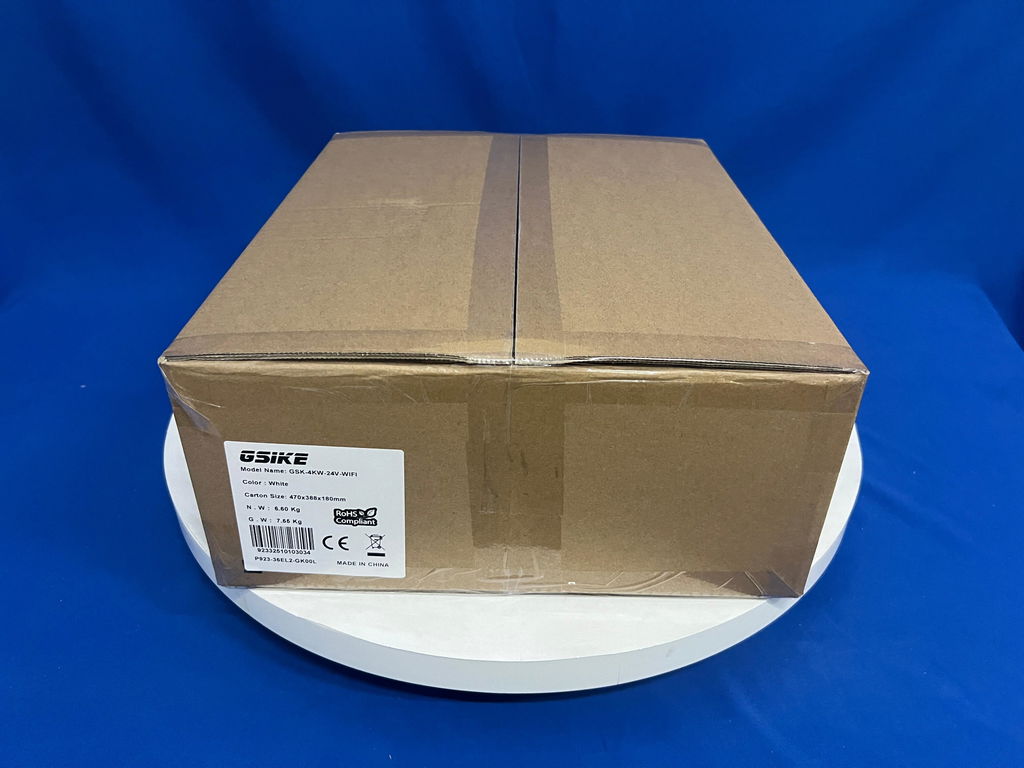
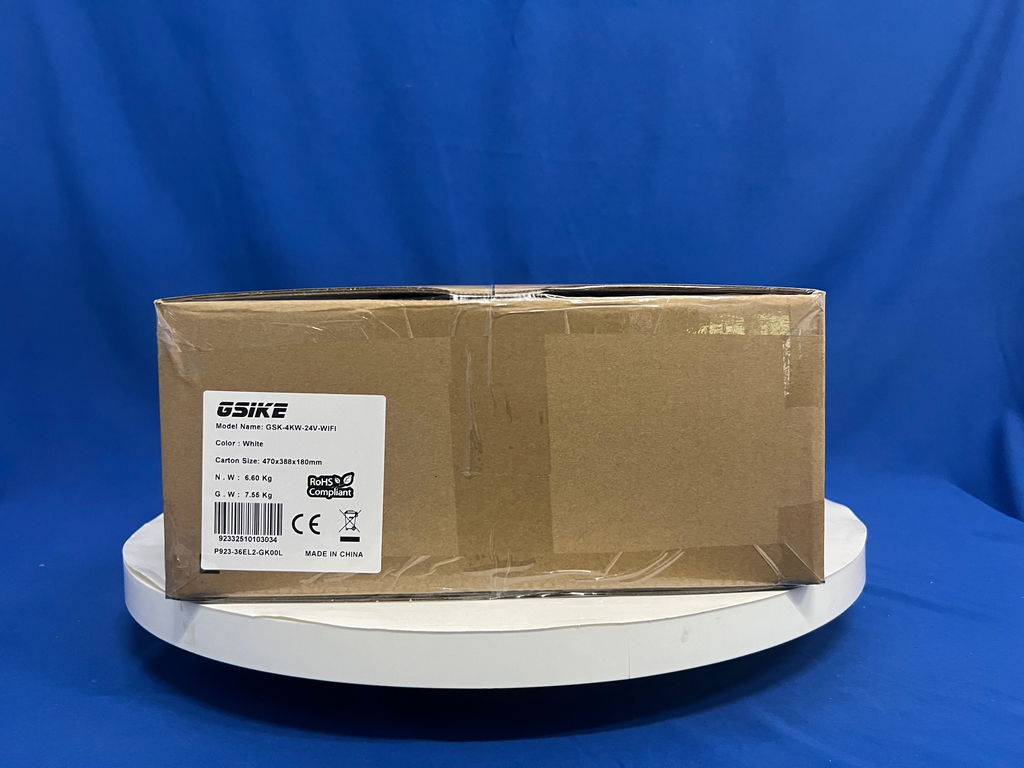
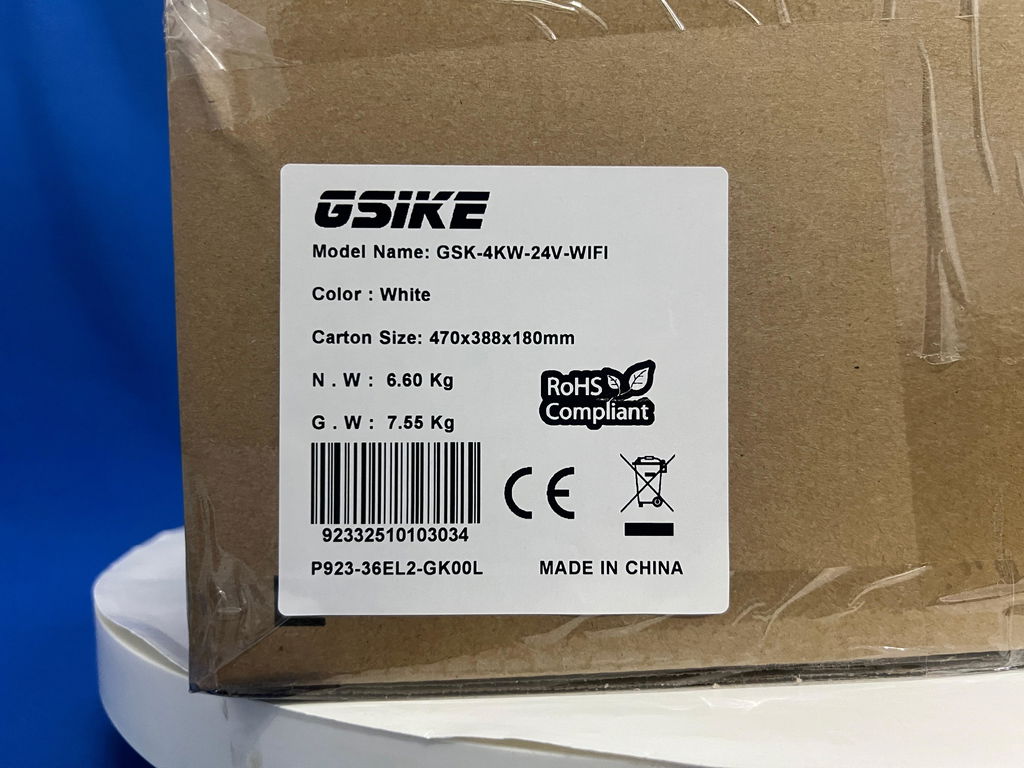
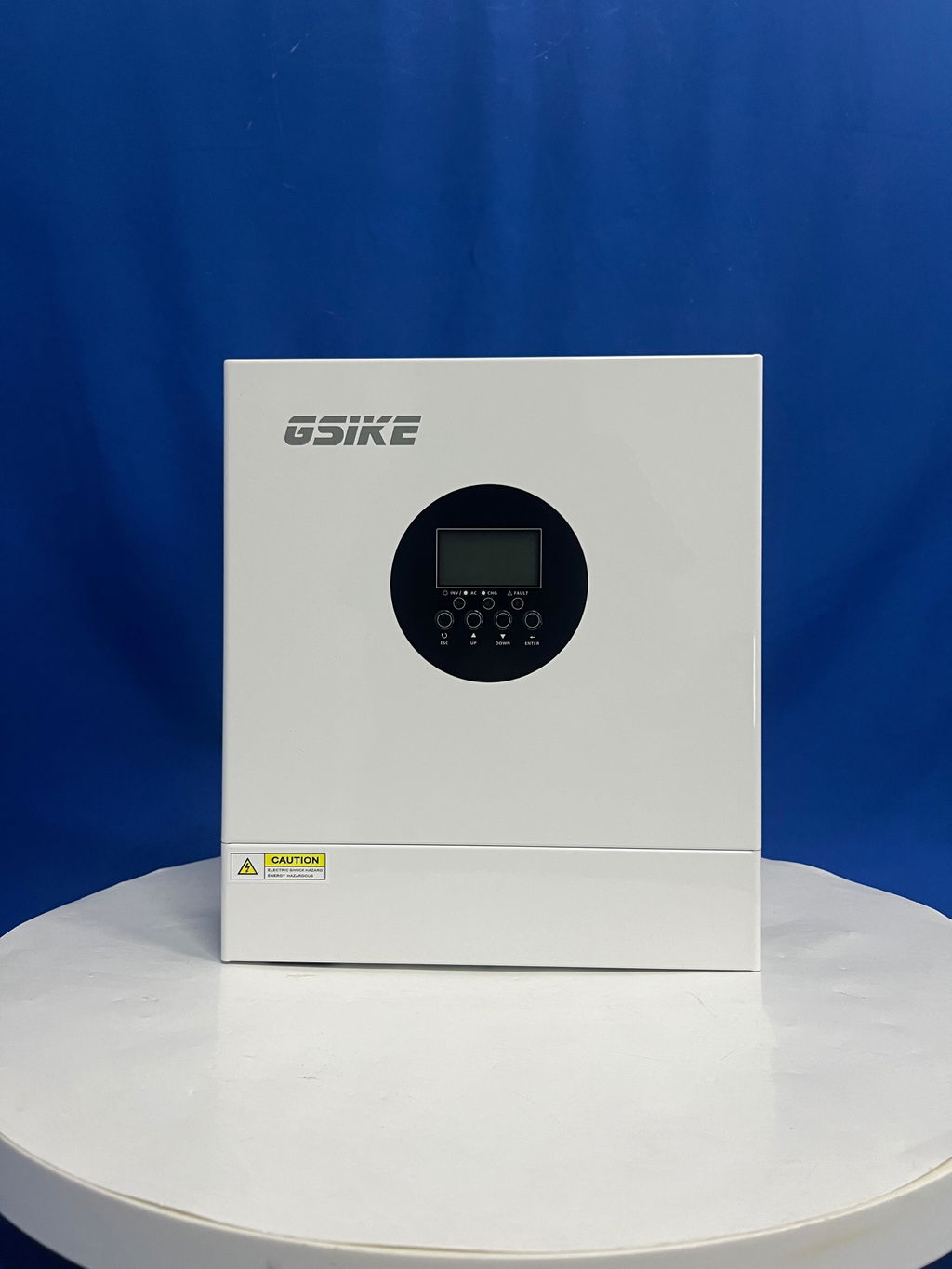
Official product photo
Official manufacturer images: front panel, MPPT and install; the manual table prevails.


Shipping, return and service (EU, 15 countries)
| Item | Detail |
|---|---|
| Price | 189.99 EUR promotion, struck from 380.00 EUR · in stock, new |
| Free delivery to | GB, DE, FR, IT, ES, NL, BE, AT, SE, DK, FI, IE, PT, PL, CZ (15 EU countries) |
| Handling / transit | 1–3 days handling + 2–7 days transit, shipping rate 0 EUR |
| Returns | 30-day return window from delivery, original condition and packaging |
| Warranty & support | manufacturer warranty terms, technical support |
Prices in EUR; final logistics, duties and taxes are confirmed at checkout.
Häufig gestellte Fragen
G4200EU24V: what continuous and surge power does this 24V unit deliver?
The G4200EU24V rates 4200W / 4.2kVA continuous in pure sine wave, with an 8000VA (about 2×) short surge for motor and compressor startup; it sits in the 24V class, not the 11kW class. Bring 230 V power to a garden room for a laptop, router, lighting and a kettle without a grid connection. The WiFi remote monitoring has completely changed how I manage my solar system. From my phone I can check battery levels, power output and system status from anywhere, whether I am at home or traveling. It is reassuring to open the app and confirm everything is running smoothly. Setup of the WiFi connection was quick, and the data refreshes reliably. For anyone who wants the convenience of remote access and remote control, this inverter's WiFi capability is a big plus that adds real value to the whole package.
Does the G4200EU24V use a single 120A MPPT channel or dual trackers?
It uses one single MPPT channel at 120A solar charge current over a 60–500 Vdc working range, with a theoretical array near 6200W; it is not a dual-MPPT model. Portable PV plus a small 24 V inverter runs a caravan's outdoor kitchen, lights and media on a quiet coastal pitch. The whole experience with this inverter has been very positive from start to finish. The product arrived well packaged, the documentation was helpful, and the unit has performed exactly as described since day one. I appreciate that all the key features like MPPT, dual output and remote monitoring work out of the box without fuss. When I had a small question, the support was responsive and helpful. Buying this inverter has been a smooth, reassuring process and I would gladly recommend it to friends and family.
Parallel G4200EU24V: can two units be linked for more kilowatts?
No. This model is a single unit only and cannot be paralleled with another GSIKE unit; higher power requires a larger standalone inverter class. Wall-mount the unit outside a modest farmhouse to run a water pump, fencing and a few livestock loads. This 4kW inverter exceeded all my expectations for a backup power setup. I paired it with a 24V lithium battery bank and two solar panels, and it runs my fridge, TV, router and several LED lights without any hiccups. The pure sine wave output is clean and stable, which is important for my sensitive electronics. Installation was straightforward thanks to the clear manual, and the whole unit stays quiet and cool even under a decent load. I have been using it daily for about two months now and it has never once tripped or caused a problem.
Which battery voltage and charge profile does the G4200EU24V need?
It requires a 24V DC battery bank, float charge 27V, overcharge protection at 33V, CC/CV profile supporting lead-acid and LiFePO4, with lithium activated from PV or mains. The 8000 VA surge starts a bench drill or grinder, while the battery keeps the workbench lit after dark. I run a fairly full household load through this inverter including my refrigerator, washing machine, water pump and all the lights and electronics in my home. It handles everything effortlessly without dropping voltage or tripping, even when several appliances start at once. The 4kW capacity gives me plenty of headroom, and I have never once felt the system was struggling. The stable performance under real-world conditions has made this inverter the backbone of my home power setup, and I am thoroughly satisfied with it.
G4200EU24V battery-free: does it run during the day without batteries?
Yes, it runs on PV or mains alone in daytime, but once the sun sets there is no overnight reserve without a 24V battery bank. Two compact 24 V LiFePO4 packs on a shelf communicate over RS485; the 120 A stage charges a 400–600 Ah bank gently. The 80A MPPT solar charge controller has impressed me with how efficiently it tracks the sun and harvests power. Even on partially cloudy days, it adjusts quickly and keeps my battery charging steadily, which is far better than the older PWM controller I used before. I have noticed my battery stays fuller for longer and my daytime solar usage is more effective. The smart tracking algorithm clearly maximizes the energy I get from my panels. This inverter is an excellent upgrade for anyone serious about solar efficiency.
How does G4200EU24V WiFi and RS232/RS485 monitoring connect?
WiFi monitoring plus RS232 (DB9) and RS485 (RJ45) report voltage, charge current and temperature to the app; dry-contact supports generator or ATS signals. Fridge, kettle and warm LED kitchen lighting run quietly on pure-sine power — the everyday loads this 4 kW unit is sized for. I installed this inverter in my off-grid holiday cabin and it has been absolutely perfect for the job. It powers all the essentials including lights, a small fridge, charging stations and even a kettle without any trouble. The compact all-in-one design meant I did not need to buy separate controllers, which saved me both money and installation hassle. Even in remote conditions it has run reliably for months. If you have a cabin, shed or tiny home that needs dependable off-grid power, this is an outstanding option.
What solar array size fits the G4200EU24V 120A MPPT?
Panel voltage must stay in 60–500 Vdc; the theoretical 6200W figure is a sellpoint, while usable charge power is set by the 120A × 24V limit, so size strings accordingly. The GSIKE 4.2kW delivers 4200 W / 4.2 kVA of continuous pure-sine 230V AC across a dual output (a main plus a secondary circuit), and an 8000 VA surge for about 5 seconds — a 2.0× rating sized to start a refrigerator, a well pump or a small compressor that draw several times their running current at startup. The LCD display on this inverter is one of the best I have used. It shows battery voltage, state of charge, temperature and several other key readings at a glance, so I can quickly check the health of my system without needing any external app. The screen is bright, easy to read even in daylight, and the menu navigation is intuitive. It took me just a few minutes to set my preferred charging parameters. For someone who likes to keep an eye on their solar setup, this display is genuinely useful.
What AC output waveform and voltage does the G4200EU24V produce?
Pure sine wave at 220–230 V AC, 50/60Hz, protecting sensitive electronics; it is an off-grid / backup unit, not a grid-tie inverter. Yes. This 24V hybrid inverter is specified to run on PV or mains with no battery bank connected, and lithium packs can be activated from PV or the grid. The honest trade-off is that battery-free mode gives no overnight power after sunset, so a 24V LiFePO4 battery bank is still required for evening or night-time off-grid loads. The GSIKE 4.2kW delivers 4200 W / 4.2 kVA of continuous pure-sine 230V AC across a dual output (a main plus a secondary circuit), and an 8000 VA surge for about 5 seconds — a 2.0× rating sized to start a refrigerator, a well pump or a small compressor that draw several times their running current at startup.
Can the G4200EU24V feed excess solar back into the public grid?
No, it does not export to the grid and has no anti-islanding feed-in function; it stores or consumes self-generated power locally. There is one single MPPT channel rated at 120 A, accepting a 60–500 Vdc PV array up to about 6200 W. The theoretical solar charge power is 120 A × 24 V = 2880 W (about 3240 W at the 27 V float). A sensible 3 kWp build (for example 6 × 550 W panels) sits comfortably inside that limit. Yes. This 24V hybrid inverter is specified to run on PV or mains with no battery bank connected, and lithium packs can be activated from PV or the grid. The honest trade-off is that battery-free mode gives no overnight power after sunset, so a 24V LiFePO4 battery bank is still required for evening or night-time off-grid loads.
What shipping, returns and warranty apply to the 189.99 EUR G4200EU24V?
Free delivery to 15 EU countries, 1–3 days handling plus 2–7 days transit, 30-day return window in original condition, and manufacturer warranty with technical support; 189.99 EUR instead of 380.00 EUR. At 24 V the full-load battery current is about 4200 / (24 × 0.92) = 190 A, which forces very thick 35–70 mm² cables and heavy volt-drop losses. Systems of 6.2–11 kW are therefore built on 48 V, where the current is halved. This 24V inverter is the right choice only up to about 4 kW per unit. There is one single MPPT channel rated at 120 A, accepting a 60–500 Vdc PV array up to about 6200 W. The theoretical solar charge power is 120 A × 24 V = 2880 W (about 3240 W at the 27 V float). A sensible 3 kWp build (for example 6 × 550 W panels) sits comfortably inside that limit.
Guides and comparisons
Despite its compact size, this inverter delivers genuinely powerful output that easily meets my daily energy needs. The clever integrated design keeps the footprint small while packing in a full inverter, solar controller and charger. I mounted it in a tight utility space with no problem, and it still manages to cool itself efficiently. It is amazing how much capability is packed into such a neat unit. If space is limited in your setup but you still need strong, reliable 4kW power, this is an excellent fit.
We had a couple of extended power outages recently and this inverter kept our home running the whole time. The seamless transfer to battery power meant we barely noticed the grid going down, and the automatic restart after power returned worked perfectly. The refrigerator stayed cold, our internet stayed up, and the kids' devices kept working, which made a stressful situation much easier. For dependable backup power that you can truly count on, this 4kW inverter has proven itself again and again.
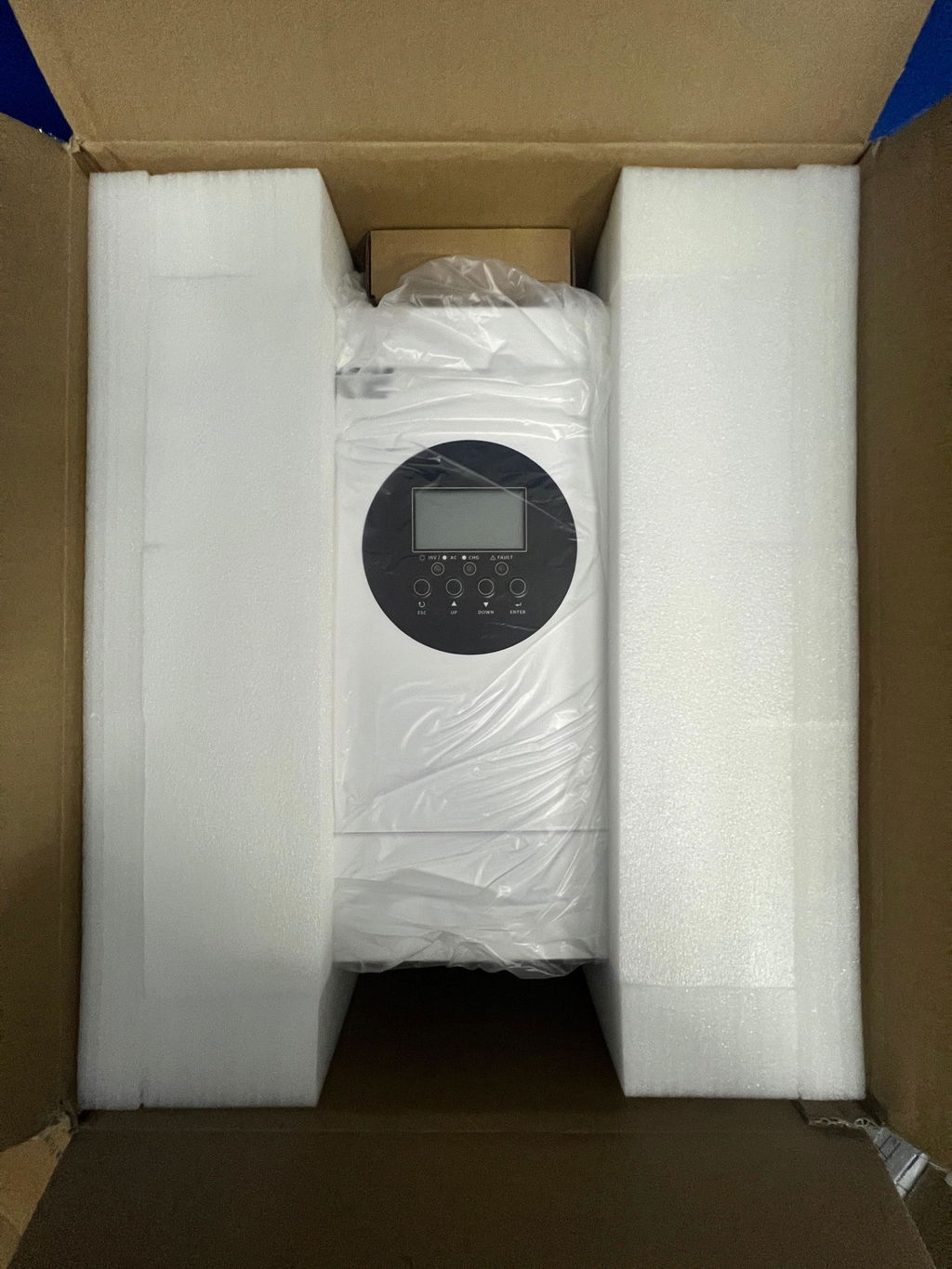
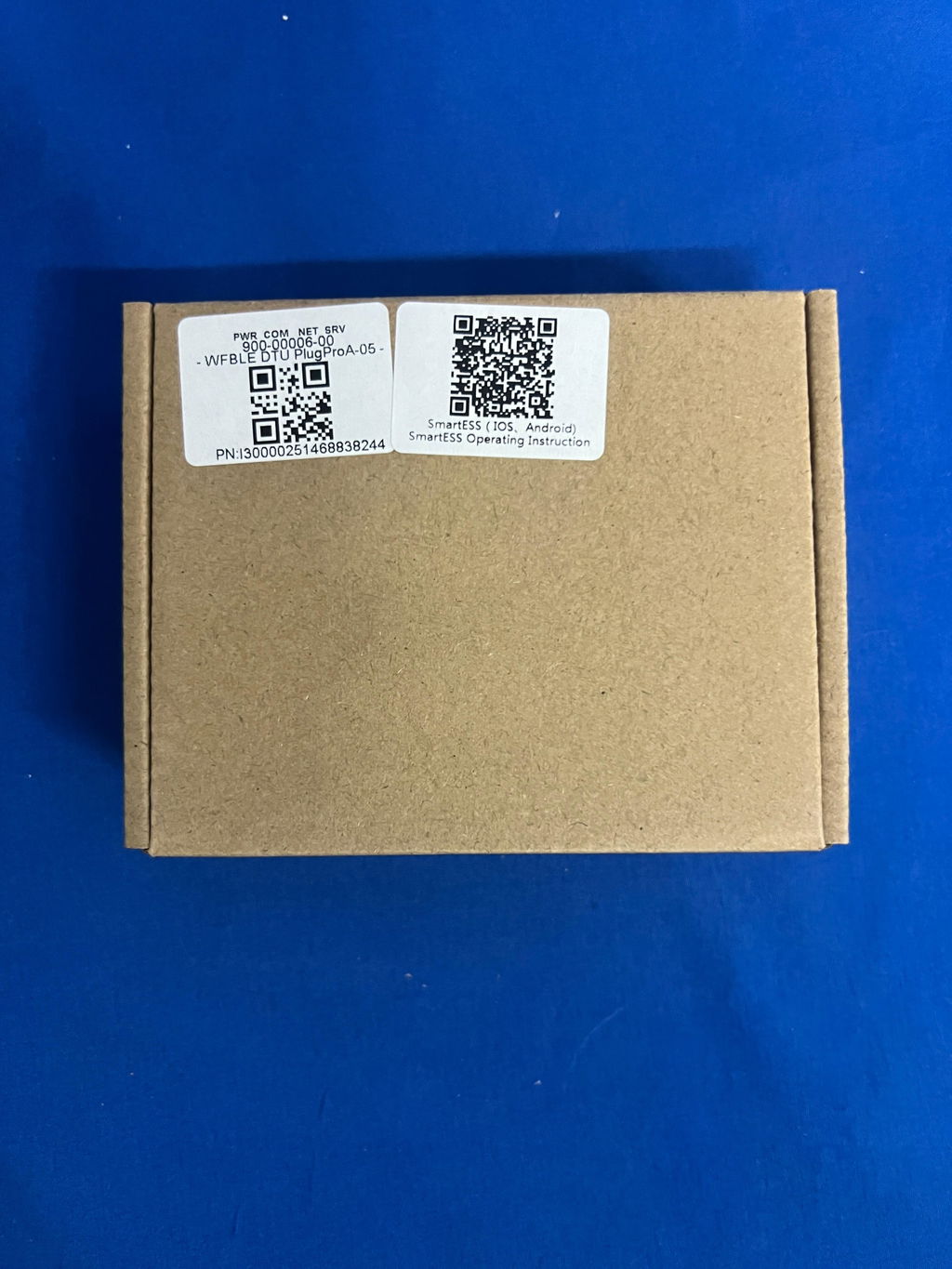
The whole experience with this inverter has been very positive from start to finish. The product arrived well packaged, the documentation was helpful, and the unit has performed exactly as described since day one. I appreciate that all the key features like MPPT, dual output and remote monitoring work out of the box without fuss. When I had a small question, the support was responsive and helpful. Buying this inverter has been a smooth, reassuring process and I would gladly recommend it to friends and family.
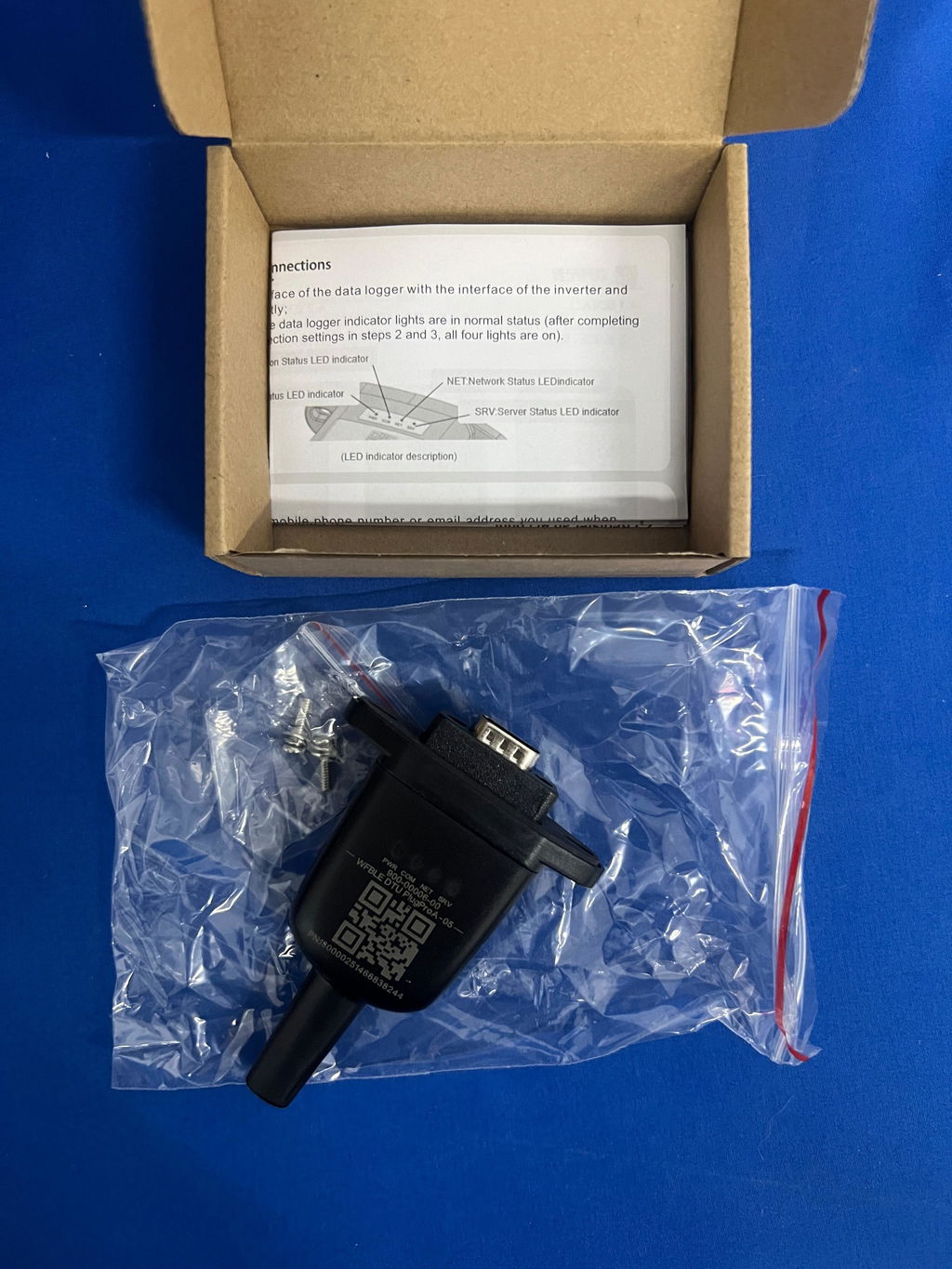
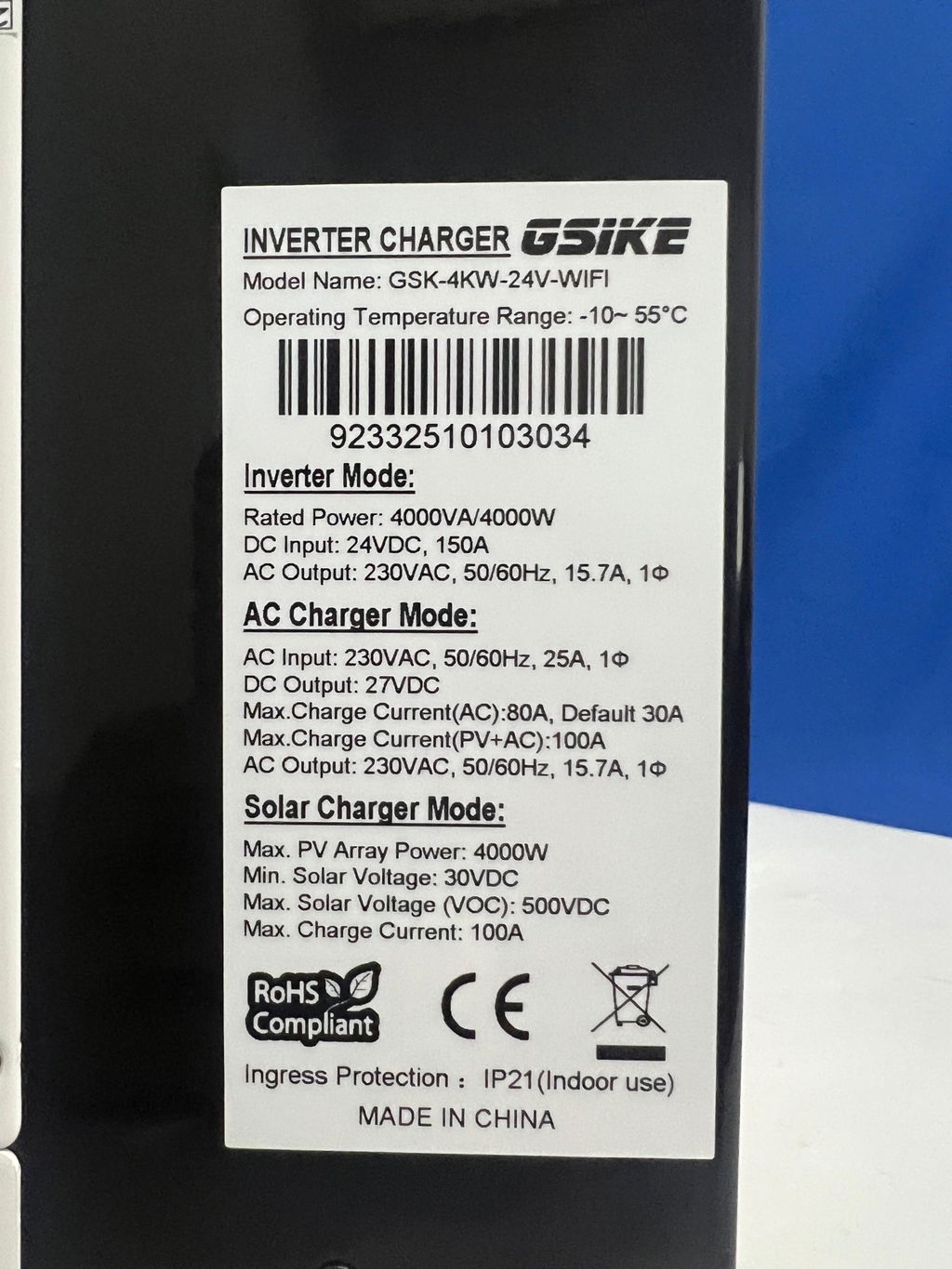
The WiFi remote monitoring has completely changed how I manage my solar system. From my phone I can check battery levels, power output and system status from anywhere, whether I am at home or traveling. It is reassuring to open the app and confirm everything is running smoothly. Setup of the WiFi connection was quick, and the data refreshes reliably. For anyone who wants the convenience of remote access and remote control, this inverter's WiFi capability is a big plus that adds real value to the whole package.
This 4kW inverter exceeded all my expectations for a backup power setup. I paired it with a 24V lithium battery bank and two solar panels, and it runs my fridge, TV, router and several LED lights without any hiccups. The pure sine wave output is clean and stable, which is important for my sensitive electronics. Installation was straightforward thanks to the clear manual, and the whole unit stays quiet and cool even under a decent load. I have been using it daily for about two months now and it has never once tripped or caused a problem.
The build quality of this 4kW inverter is noticeably robust. The casing is sturdy, the terminals are solid, and everything feels well made and built to last. It has been running continuously for weeks and shows no signs of wear or overheating. The overall construction gives me confidence that it will serve me reliably for years to come. For a device that handles your home's critical power, durable construction really matters, and this unit clearly does not cut corners on quality.
I run a fairly full household load through this inverter including my refrigerator, washing machine, water pump and all the lights and electronics in my home. It handles everything effortlessly without dropping voltage or tripping, even when several appliances start at once. The 4kW capacity gives me plenty of headroom, and I have never once felt the system was struggling. The stable performance under real-world conditions has made this inverter the backbone of my home power setup, and I am thoroughly satisfied with it.
I love how this inverter combines the solar charger, grid charger and inverter all in one compact unit. Before, I had three separate devices taking up wall space and a tangle of cables, but now everything is neatly integrated. The 80A MPPT controller does an excellent job of squeezing maximum power from my panels, and the grid charger tops up the battery automatically when solar is low. For anyone with limited mounting space who wants a tidy, efficient setup, this all-in-one design is a genuinely smart choice that simplifies the whole system.
I am not particularly technical, but I found this inverter surprisingly easy to install and configure. The manual is clear, the wiring is well labeled, and the menu settings are logical enough that I set everything up on my own in about an hour. Connecting my battery, solar panels and AC loads was straightforward, and the unit fired up without any issues. For anyone who is a bit intimidated by solar systems, this inverter removes most of the complexity and makes going off-grid much more approachable.
I have owned cheaper inverters before and they always let me down in the end, but this one feels different from the start. The quality, features and performance justify every dollar I spent. It is efficient, quiet, packed with protective features and simple to monitor remotely. I use it daily and it has become an indispensable part of my home energy system. For anyone weighing up whether to spend a little more on a quality inverter, I can say from experience that this is absolutely worth it.
The smart power switching feature has genuinely reduced my electricity bills. I set the inverter to solar-first mode, so during the day it runs my household appliances entirely from solar energy and only draws from the grid when the battery gets low. When the sun is strong the battery stays topped up and I barely use any grid power at all. Switching between solar, battery and grid priority is quick and simple from the menu. Over the past month my grid consumption dropped noticeably, and I could not be happier with the savings.
I switched to this inverter mainly because of its clean pure sine wave output, and it has been excellent for my sensitive electronics. My laptop, desktop PC and audio equipment all run perfectly with no flickering, buzzing or strange behavior. The power quality is genuinely stable, which matters when you have expensive devices that can be damaged by modified sine wave inverters. For anyone running computers or appliances with motors, the pure sine wave output of this unit is a serious advantage worth paying for.
The automatic switching between solar, battery and grid power is incredibly smooth on this inverter. There is no noticeable interruption or flicker when it changes the primary source, which is exactly what you want to protect your devices and keep things running seamlessly. I have watched it switch during the day as solar production changes and the system just hums along without missing a beat. This intelligent, automatic management makes the whole setup effortless and gives me confidence in its reliability.
The LCD display on this inverter is one of the best I have used. It shows battery voltage, state of charge, temperature and several other key readings at a glance, so I can quickly check the health of my system without needing any external app. The screen is bright, easy to read even in daylight, and the menu navigation is intuitive. It took me just a few minutes to set my preferred charging parameters. For someone who likes to keep an eye on their solar setup, this display is genuinely useful.
I was a little worried about running appliances with motors, like my water pump and refrigerator, but this inverter handles them with ease. The voltage stays stable even during the higher starting current that motors draw, so nothing stutters or cuts out. This is a real testament to the quality of the inverter's design and its pure sine wave output. Over several weeks of use I have had zero issues with any of my appliances. It has proven itself to be a reliable and capable workhorse for my home.
One thing that surprised me pleasantly is how quiet this inverter runs, even when I push it with a substantial load. There is a gentle fan noise but nothing obnoxious, and it does not get disturbingly hot like some cheaper units I have owned. The cooling design clearly works well, and the unit maintains a steady output without any whine or hum. After using it for several weeks, I am impressed with how smoothly and quietly it operates. It is a great fit for anyone who wants reliable power without constant noise.
The remote monitoring and control features have made managing my system incredibly convenient. From my phone I can not only view real-time data but also adjust settings and switch power priorities without going near the unit. This is especially handy when I am away from home for a few days and want to check that everything is running correctly. The app interface is clean and the connection is stable. It is a genuinely useful feature that elevates this inverter well above more basic alternatives.
The 80A MPPT solar charge controller has impressed me with how efficiently it tracks the sun and harvests power. Even on partially cloudy days, it adjusts quickly and keeps my battery charging steadily, which is far better than the older PWM controller I used before. I have noticed my battery stays fuller for longer and my daytime solar usage is more effective. The smart tracking algorithm clearly maximizes the energy I get from my panels. This inverter is an excellent upgrade for anyone serious about solar efficiency.
I appreciate how intuitive the LCD menu is on this inverter. I was able to adjust the charging voltage, switch between power priorities and set the dual output options within minutes, all guided by the clear on-screen menus. Everything is logically organized and the display is responsive. Even my wife, who is not familiar with inverters, found it easy to check the system status. Having a straightforward interface makes maintaining and tuning the system a genuine pleasure rather than a chore.
After comparing several brands, I found this 4kW inverter offers exceptional value for the price. You get a high-quality pure sine wave inverter, an efficient 80A MPPT solar controller, a grid charger and full remote monitoring capability all in one affordable package. The build quality feels solid, the performance is dependable, and it has handled my daily load without any trouble. I honestly do not think you can find a better combination of features and reliability at this price point. A very wise investment.
I configured the battery priority mode and it works exactly as intended, keeping my appliances running from stored solar energy for as long as possible before switching to grid. This has extended my backup capacity significantly and made my system far more self-sufficient. The automatic switching is seamless, and I never notice any interruption when the source changes. Being able to control which energy source the inverter prefers gives me real flexibility and control over my power usage. Great feature that works flawlessly.
The lithium battery communication support is the feature that convinced me to buy this inverter, and it did not disappoint. It auto-recognized my PYLON battery within minutes and activated the correct communication protocol without any manual configuration. The LCD now displays accurate state of charge, voltage and temperature, so I always know exactly what is happening with my battery. This makes the system much safer and more efficient because the charging profile is always matched to my battery. Highly recommended for anyone using modern lithium batteries.
Safety was my top concern when choosing an inverter, and this unit delivers comprehensive protection across the board. It guards against overvoltage, undervoltage, overheating and overload, and I have seen the protections trigger correctly during a brief surge. The unit shuts down cleanly instead of risking damage to my battery or appliances. Since installing it, I have not worried once about electrical faults. This level of built-in protection is exactly what you want for a home power system that needs to run reliably for years.
The dual output function is a thoughtful safety feature that I really appreciate. When the battery is running low, the inverter keeps power flowing to my essential loads like the refrigerator, router and alarm system, while non-essential circuits can be shed. This gives me confidence that even during a long outage my important appliances stay protected and powered. It is a feature many cheaper inverters lack, and it adds real peace of mind for a family that relies on stable power. Very well thought out design.

