


GSIKE FixWall 15.0: 314Ah 16.08kWh Floor Battery, Estonia
Estimate delivery times: 2-7 Business days (European Union, United States).
Return within 30 days of purchase. Duties & taxes are non-refundable.
GSIKE FixWall 15.0: 314Ah 16.08kWh Floor Battery, Estonia
Description
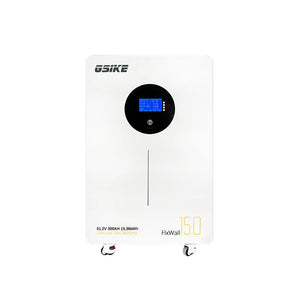
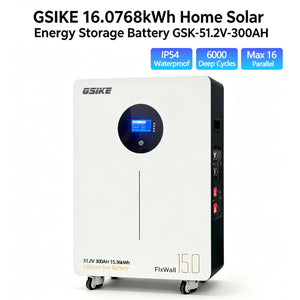
GSIKE FixWall 15.0 — 51.2V 300Ah (314Ah) 16.08kWh floor LiFePO4 cabinet with 200A BMS for Estonian homes, farms and rural sites
The GSIKE FixWall 15.0 is a rolling 51.2V 314Ah LiFePO4 cabinet holding 16.08kWh, listed at €1,569.99 against a struck reference of €2,250.00. It is a battery-only DC node with no built-in AC outlet, positioned behind a separate 230V or 230/400V hybrid inverter for whole-home backup, PV self-consumption and rural autonomy in Estonian houses, farms and remote properties.
Product Overview
This sizeable 48V-class cabinet on casters rolls into a garage, cellar, technical room, country property or farm building and feeds a compatible hybrid inverter. The cabinet holds DC energy only and produces no AC on its own; any household circuit is fed through the inverter selected for the job.

The list price is €1,569.99, against the €2,250.00 reference; a single variant is in stock. The checked offer includes free delivery to the 15 listed EU markets: order handling 1–3 days, onward transit 2–7 days; a 30-day return and a three-year warranty apply within that scheme; import duties and taxes are non-refundable.
Delivery note for Estonia-based buyers: Estonia is not among those 15 listed destinations, so delivery to an Estonian address, ordering terms and import formalities must be checked on the live listing before purchase. The shipping and return conditions above cover only the listed 15 EU markets. See the current storefront listing: GSIKE 51.2V 314Ah LiFePO4 cabinet on gesike.com.
Battery and Electrical Specifications
Every figure quoted below comes from the verified 300Ah cabinet record. Penghui (Great Power) supplies the 3.2V prismatic LFP cells, built 16S1P and watched over by a smart 200A BMS.
| Specification | Detail |
|---|---|
| Chemistry and assembly | Prismatic 3.2V LiFePO4 cells, 16S1P; cell brand Penghui (Great Power) |
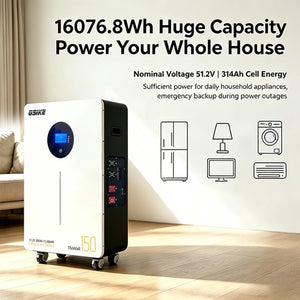
| Nominal voltage | 51.2V (48V-class bus) |
| Real capacity and energy | 314Ah / 16,076.8Wh = 16.08kWh; the printed 300Ah / 15.36kWh mark is the nominal marketing label |
| BMS current | 200A charge and 200A discharge, DC ceiling about 10.2kW (10,240W at 51.2V); this is not a 15kW continuous rating |
| Working voltage | 43.2V – 58.4V; discharge cut-off near 43.2V |
| Charge voltage | 58.4V bulk/absorption, standard CC/CV profile for 16S LFP |
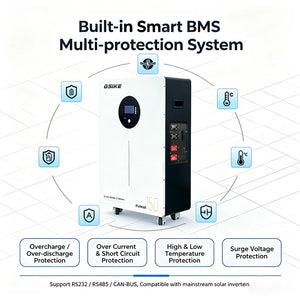
| Built-in smart BMS | Protection against over-charge, over-discharge, over-current, short-circuit, high and low temperature, surge voltage |
| Communication | RS232, RS485 (Pylontech protocol), CAN-BUS for pairing with a compatible 48V hybrid inverter |
| Inverter compatibility | Suitable devices: Deye, Growatt, Sungrow, Sofar, Sol-Ark, EG4; compatibility is not certified for every model, verify before purchase |
| Cycle life | 6000 cycles at 80% DoD, 25°C; design life roughly ten years; beyond 10,000 cycles at 50% DoD |
| Usable reserve | About 12.9kWh at 80% DoD; roughly 11.5–12kWh usable AC through an inverter of around 95% efficiency |
| AC output | None; battery-only DC node; phase count depends on the connected inverter |
| Monitoring | Round LCD and on/off switch; no WiFi or Bluetooth, no mobile app |


Expansion, Mounting and Housing
Several cabinets can stand side by side on the 51.2V bus; casters let the unit be rolled into position, and the IP54 case is intended for dry indoor rooms or a closed sheltered position in an Estonian home or premises.
| Specification | Detail |
|---|---|
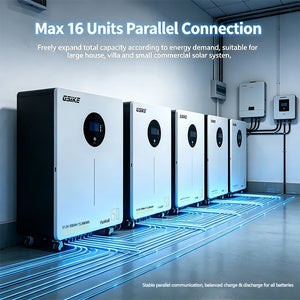
| Expansion scheme | Parallel only, up to 16 cabinets on the 51.2V bus with unique address 1–16; series connection not allowed |
| Mixing rule | Do not mix brands or capacities in the same parallel bank |
| Form factor | Floor-standing cabinet on casters, rollable; round LCD, on/off switch, terminal blocks |
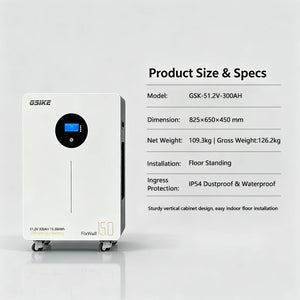
| Ingress rating | IP54, dust-tight and splash-proof; not waterproof; indoor or dry sheltered use only |
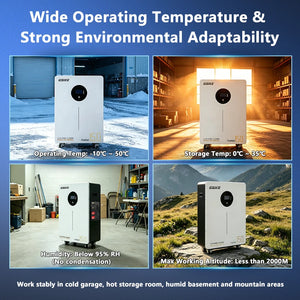
| Operating temperature | −10°C to 50°C |
| Storage temperature | 0°C to 35°C; humidity below 95% RH without condensation; altitude below 2000m |
| Low-temperature charging | No self-heating; do not charge below 0°C |
| Net weight | 109.3kg |
| Gross weight | 126.2kg on pallet |
| Dimensions | 825 H × 650 W × 450 D mm |


Home, Solar and Rural Context in Estonia
One cabinet keeps essential household circuits through an evening interruption and, set for self-consumption, moves solar energy toward the afternoon and evening load. On a rural site it can support multi-day autonomy alongside daytime yield; runtime depends on consumption, inverter efficiency, depth of discharge and the number of cabinets on the bus.
| Context Point | Detail |
|---|---|
| Whole-home reserve | About 12.9kWh usable at 80% DoD before inverter losses; size essential and whole-home circuits to this reserve rather than to the full nominal 16.08kWh |
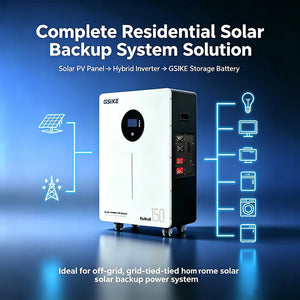
| Inverter pairing | Works with a compatible single-phase 230V or three-phase 230/400V inverter; phase count and backup switching belong to the inverter |
| PV self-consumption | Charged by rooftop or ground-mounted PV through the hybrid inverter or MPPT regulator; autonomy days are planned around daily yield and the evening load |
| Placement | Floor standing with room for the casters; check floor load-bearing, ventilation and the delivery route before pallet arrival, and keep the unit in a heated dry room clear of sauna humidity |


In the Packaging
| Item | Included |
|---|---|
| FixWall 15.0 51.2V 314Ah cabinet with casters | Yes |
| Terminal blocks and connection fittings | As specified; check the cables on the product listing before purchase |
| User manual | Included |
| Hybrid inverter, solar panels or mounting rails | Not included; chosen separately for the Estonian installation |
Pros & Cons
Objective Strengths
- Generous reserve: A 314Ah cell rating holds 16.08kWh for whole-home backup, evening cover and multi-day autonomy at an Estonian home, farm or holding.
- Strong BMS: A 200A charge/discharge BMS, six protection levels and cell balancing support steady household and workshop loads.
- Closed-loop communication: RS232, Pylontech-protocol RS485 and CAN-BUS keep charge limits aligned with the matched 48V inverter.
- Scalable bank: Sixteen cabinets is the parallel ceiling if storage needs expand later, all on the 51.2V bus.
- Service life: Rated 6000 cycles at 80% DoD and 25°C, about a ten-year design horizon, with a three-year warranty.
- Rollable format: Casters place the cabinet in a garage, cellar or plant room without a wall bracket.
Objective Weaknesses
- DC only: The unit gives no AC outlet; household circuits require a separate 48V hybrid inverter.
- DC ceiling: 200A denotes a roughly 10.2kW DC ceiling, not a 15kW continuous nameplate; plan loads within this limit.
- No mobile app: Status lives on the round LCD only; WiFi, Bluetooth and phone control are not provided.
- Parallel-only scheme: Series strings cannot be formed; cabinets from other brands or ratings never share the bank.
- No built-in heater: There is no low-temperature warming element; charging the cells below 0°C is not allowed.
- Heavy enclosure: Net 109.3kg (gross 126.2kg on pallet) needs a solid floor, two people to move it and clear space for delivery.
Practical Applications
High-capacity fixed storage is the cabinet's role: the 48V DC node feeds a compatible inverter across home backup, cellar and plant-room, workshop and garage setups.

Home Technical Room
The cabinet stands in a ventilated, heated technical room wired to the hybrid inverter, so essential circuits are ready for an interruption.

Parallel Reserve Bank
Extra cabinets join the bus in parallel and raise total stored energy for a larger home or a site needing a longer reserve.

Farm, Workshop and Small Shop
A farm holding, compact workshop or small shop can lean on the unit to keep tools, fridges and circuits steady on reserve.

Garage or Outbuilding Placement
Casters roll the unit into a garage or closed outbuilding for installation and maintenance; no wall bracket is required.
Frequently Asked Questions
What voltage, Ah rating and stored energy does the FixWall 15.0 actually carry?
The cabinet works on the nominal 51.2V 48V-class bus, uses a 314Ah cell rating, and holds 16,076.8Wh, or 16.08kWh, from 3.2V LiFePO4 cells in 16S1P. The 300Ah / 15.36kWh printing on the case is the nominal marketing label, not the measured cell value.
What DC power ceiling does the 314Ah cabinet BMS allow?
The smart BMS holds both charge and discharge to 200A, a DC ceiling near 10.2kW (10,240W at 51.2V). This is not a 15kW continuous output; AC delivered to any household load depends on the separate inverter attached to the battery.
Will the cabinet run Estonian appliances without its own inverter?
It will not. No AC outlet is built in, so the unit remains a DC-only node. Whether the home receives 230V single-phase or 230/400V three-phase AC is decided by the separate hybrid inverter, never by the cabinet.
Which inverters talk to the battery in a three-phase installation?
Comms travel over RS232, an RS485 Pylontech-protocol line and CAN-BUS. The pack targets 48V Pylontech-compatible inverters such as Deye, Growatt, Sungrow, Sofar, Sol-Ark or EG4; not every model is certified compatible, so check the protocol before buying.
What is the parallel cabinet limit on a single 51.2V bus?
Sixteen cabinets is the parallel ceiling, each assigned a unique address 1 through 16. Series strings cannot be built, and cabinets from other brands or with different ratings never share a bank.
What cycle life, design horizon and warranty cover this cabinet?
The rating stands at 6000 cycles to 80% depth of discharge at 25°C, a design horizon near ten years, and more than 10,000 cycles at 50% DoD. A three-year warranty accompanies the unit.
How much energy remains usable after depth-of-discharge and inverter losses?
At an 80% DoD cycle the reserve sits near 12.9kWh before inverter losses; through an inverter around 95% efficient, about 11.5–12kWh of usable AC arrives at the home.
How is the cabinet placed indoors, and what are its weight and case size?
Casters roll the unit into position; there is no wall mounting. Net weight is 109.3kg, gross 126.2kg palletised, and the case spans 825 H × 650 W × 450 D mm. Round LCD, on/off switch and terminal blocks complete the IP54-rated indoor or dry-sheltered package.
Which fault conditions does the cabinet's smart BMS protect against?
The controller watches over-charge, over-discharge, over-current, short-circuit, high or low temperature and surge-voltage events, and keeps the internal cells balanced against each other.
What operating and storage temperatures apply, and is sub-zero charging allowed?
Use runs from −10°C to 50°C, storage from 0°C to 35°C. No self-heating element is present, and charging below 0°C is forbidden; in the Estonian winter place the cabinet in a heated dry room, clear of sauna moisture and unheated outbuildings.
Related GSIKE Estonian Guides
How repeated outages and shifting the evening load change the value of the 16kWh cabinet in an Estonian home.
Compare the cabinet with established 16kWh options on capacity, communication, format and warranty.
Plan stored energy for multi-day autonomy around daily consumption and solar yield at a country house, farm or remote plot.
Review three-phase inverter pairing, parallel cabinet addressing, wiring checks and pallet delivery in a home installation.
LiFePO4 battery 51.2V 300Ah, 314Ah 16kWh home battery, whole-house backup battery, 48V 314Ah 16.08kWh LFP cabinet, GSIKE FixWall 15.0, 16kWh LiFePO4 battery for a solar system, floor cabinet with 200A BMS, 16kWh battery for self-consumption, RS485 Pylontech-protocol and CAN battery, high-capacity 48V bank for Estonian home, farm and light business

